Understanding GSM: How Fabric Weight Affects Your Sourcing Decisions
GSM for textile buyers — how fabric weight affects feel, durability and cost, with guidance for cotton, poly-cotton and blended constructions.
Quick Answer: GSM (grams per square metre) is the standard measurement for fabric weight — it tells you how much fibre is packed into one square metre. Higher GSM means heavier, denser fabric. T-shirts range 140–200 GSM; bath towels 300–900 GSM; woven bed linen 60–120 GSM; denim 200–475 GSM. Use the Textile Calculator to convert between GSM, oz/yd² and other weight units.
What is GSM?
GSM stands for grams per square metre — it measures the weight of fabric per unit area. It is the single most important specification you will encounter when sourcing textiles from Pakistan.
A higher GSM indicates a heavier, denser fabric. A lower GSM means lighter, more breathable material. Neither is inherently better — the right choice depends entirely on the end product and its intended market.
Common GSM Ranges by Product
Understanding where your product should sit on the GSM scale prevents costly specification errors:
- T-shirts from Pakistan (standard): 160–180 GSM — lightweight, breathable, cost-effective
- T-shirts from Pakistan (premium): 200–220 GSM — substantial hand feel, retail-ready
- Sweatshirts & hoodies: 280–320 GSM — standard weight for most markets
- Heavyweight hoodies: 340–400 GSM — premium feel, popular in colder climates
- Bath towels — Pakistan manufacturer: 400–600 GSM — lower end for budget institutional; 550+ for hotel quality
- Bedsheets & bed linen: 100–200 GSM — thread count matters equally here
How GSM Affects Your Unit Price
Fabric cost is the largest component of most textile orders. All else equal, a 20 GSM increase on a 500-piece T-shirt order can add USD 0.30–0.50 per unit. At scale, this becomes significant.
Always specify GSM in your tech pack. Factories that quote without a confirmed GSM are quoting a different product.
Testing at the Factory
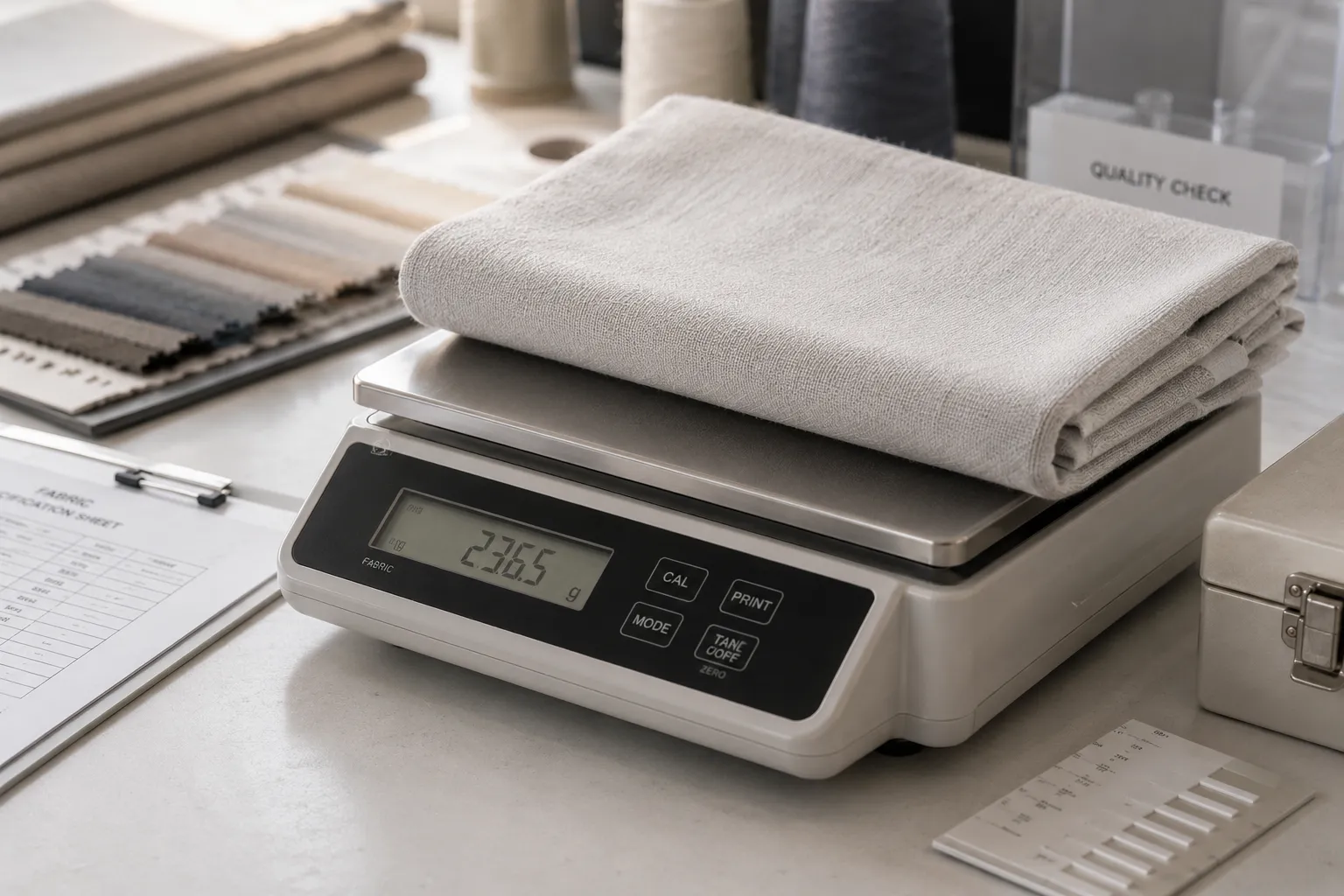
Pre-shipment inspection should always include a GSM test using a circular cutter and precision scale. A tolerance of ±5% is industry standard. Anything outside this range is grounds for a renegotiation or hold on release.
What to Ask Your Sourcing Partner
Before placing an order, confirm:
- The target GSM and acceptable tolerance range
- Whether the factory has the machinery to achieve it consistently
- Whether pre-production samples will be GSM-tested before bulk begins
MZ Global Trading confirms GSM compliance at both the pre-production and pre-shipment stage on every order.
Where to Go Next
For a complete GSM and thread-count reference table across every product category, see our GSM & Fabric Weight Guide for Buyers. To convert between oz/yd² and GSM, or to look up standard fabric weights by product type, use our Textile Calculator — instant conversions with no registration. The pre-shipment inspection checklist for textile buyers covers GSM testing protocol in detail — including tolerance thresholds and what a failing result means commercially. When your fabric specification is confirmed, submit an RFQ to receive factory options and pricing within 3–5 business days.
Disclaimer: This content is provided for general information only and does not constitute legal, customs or compliance advice. Always verify requirements against your buyer specification, applicable regulations and your destination market before making commercial decisions.
Continue Reading
Related Articles
Pakistan Textile Industry: Complete Buyer's Guide to Sourcing, Certifications & Manufacturing Hubs
Pakistan textile industry overview for international buyers — export scale, production hubs, certification landscape, product strengths, and what to know before placing your first order.
First Order from Pakistan: The Operational Sourcing Guide for International Textile Buyers
How a first Pakistan textile order works — fabric spec, payment terms, quality gates, export documentation and retail integration for international buyers.
Home Textile Fabric Guide: Terry, Percale, Sateen & Woven Constructions
Terry, percale, sateen and woven home textile fabrics sourced from Pakistan — GSM ranges, width standards and quality parameters for procurement managers.
Ready to Source?
Put this knowledge to work.
Speak with our team about your sourcing requirement. No commitment — just a direct conversation.
Request a Quote