How to Read a Textile Tech Pack: A Guide for International Buyers
How to read a textile tech pack — construction diagrams, measurement tables and fabric specs for international buyers reviewing factory submissions.
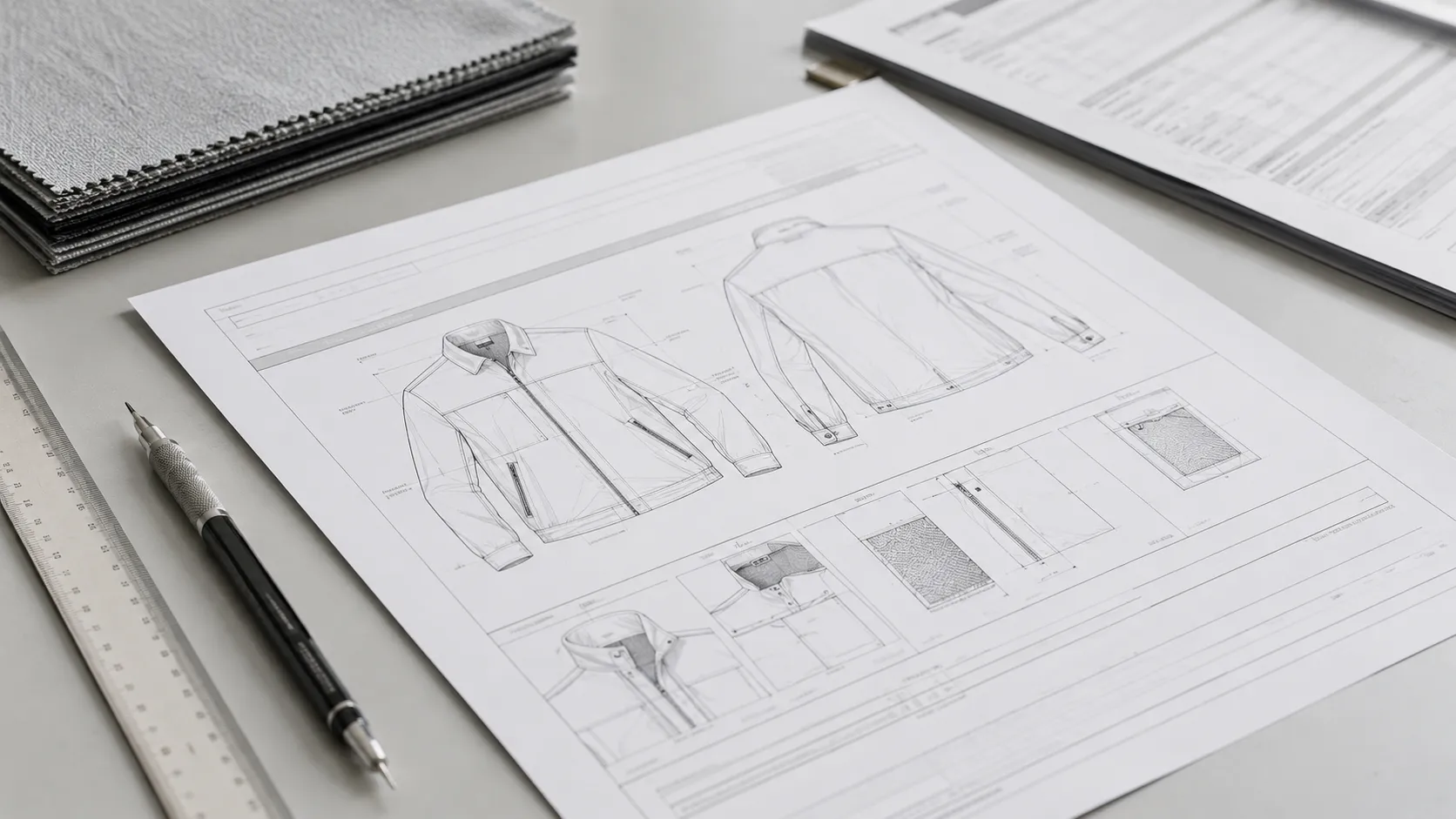
Quick Answer: A textile tech pack (technical package) is the complete specification document for a product and contains five key sections: cover sheet (product name, season, target market, version), measurement table (all dimensions with tolerances by size), materials list (fabric, trims, threads with specifications), construction diagrams (seam types, stitch counts, finishing), and artwork/label placement. Buyers who submit incomplete tech packs receive inaccurate samples — the tech pack is the specification contract between buyer and manufacturer. Download our Tech Pack Template to start your specification correctly.
What Is a Tech Pack?
A tech pack (technical package) is the complete specification document for a textile product. It is the single source of truth between buyer and manufacturer — containing every measurement, material, construction detail and finish requirement needed to produce the product correctly.
A well-written tech pack eliminates ambiguity. A poorly written one — or the absence of one — is the most common cause of production errors in international textile sourcing.
The Key Sections
Cover Sheet
The first page identifies the product: style name, style number, season, target market, fabric description and any relevant certifications required. This is also where the tech pack version number and revision history live.
Bill of Materials (BOM)
The BOM lists every component: main fabric (with GSM, composition and construction), lining, interlining, thread, labels, trims, buttons, zips, packaging materials. Each item has a specified supplier or an "as sourced" note.
Measurement Specification
The most critical section. Contains:
- A size chart with all measurement points
- Tolerance per measurement (typically ±1–2cm depending on the point)
- A technical flat sketch showing where each measurement is taken
Construction Details
Seam types, stitch counts per inch, seam allowances, topstitch distances, pocket placement — anything that affects how the garment is assembled.
Colour and Print Specifications
Pantone references for all colourways, placement coordinates for prints or embroidery, approved lab dip or strike-off references where available.
Care and Label Specifications
Wash instructions, fibre content declaration, country of origin, size label content and placement — all must comply with the regulations of your destination market. Our Textile Product Lifecycle guide on Packaging & Labelling covers mandatory requirements for USA, UK, EU, Canada and Australia.
What to Do If You Don't Have a Tech Pack
If you are developing a new product, share a physical sample, a reference garment or detailed photographs with measurements marked. MZ Global Trading can help scope the specification at enquiry stage — a complete tech pack is ideal, but is not required to begin a sourcing conversation.
Useful Resources
To write your own tech pack rather than interpret someone else's, see our step-by-step guide on how to write a Tech Pack for garment and home textile manufacturing. Pre-formatted fill-in templates are available for immediate download: Tech Pack Template for Apparel and Tech Pack Template for Home Textiles. For the commercial side of your order — shipping terms, risk transfer and document requirements — see our article on Incoterms for Pakistan textile exports (FOB vs CIF vs CFR). Once your tech pack is ready, submit an RFQ and our team will match your specification to the right factory within 24 hours.
Disclaimer: This content is provided for general information only and does not constitute legal, customs or compliance advice. Always verify requirements against your buyer specification, applicable regulations and your destination market before making commercial decisions.
Continue Reading
Related Articles
Ready to Source?
Put this knowledge to work.
Speak with our team about your sourcing requirement. No commitment — just a direct conversation.
Request a Quote